The ROI of Failure: Learn Faster, Ditch Perfection, and Build a Bold Online Success Over 50
It is failure that calls out your weak spots, then hands you the map straight to your next breakthrough. So, Congratulations, if you you blew it once again. You are in excellent company. And now is the time to forget the myth that success comes from flawless moves and “one weird trick.”
If you are a woman over 50 eyeing the digital world, you might think it’s too late or too risky to jump in. Truth: your slip-ups make you sharper, faster, and a thousand times more original than trying to play it safe or “get it right.” Every misstep is an unpaid consultant showing you what works and what doesn’t, so no sugarcoating and no wasted time.
Kick perfection to the curb. You are about to see why every wrong turn you make speeds up the path to clarity and confidence in your online journey. By the end, you will know how to outsmart perfectionism and squeeze the real profit out of every stumble.
The Beautiful (and Profitable) Perks of Messing Up
You know those moments when an awesome idea flops in spectacular fashion? Good. They are not disasters, they are shortcuts straight to what really works. Every digital product flop, abandoned blog, and “what was I thinking?” side gig brings more returns than you realize. Call it tuition for your confidence fund. If you are willing to screw up fast, you stack your wisdom (and profits) even faster.
Confession Booth: The Science Behind Learning from Epic Flops
 Photo by Tima Miroshnichenko
Here’s the scoop: your brain loves failure more than a perfect run. When something bombs, your neurons fire up a correction party. That means every flop rewires your brain for better moves next time, especially when you actually pay attention.
Scientists call this “failure as feedback.” Mess up, notice it, adjust and your brain stays sharp and creative. It’s like learning to ride a bike: wobble, crash, repeat until you roll smooth. Sitting on the sidelines doesn’t rewire anything. Research shows that real progress comes from working through mistakes, not from getting things right the first time. If you are curious about the nitty-gritty science, you can check out this piece on strategies for learning from failure.
It’s not just for Silicon Valley types. Take my friend Sarah, who tried three different Etsy digital print shops before one caught fire. The lessons from the duds made her fourth store a top seller. The brain learns by trial, error, and yep, lots of do-overs.
Here’s what happens when you treat each mishap as a clue instead of a curse:
- You bounce back quicker. Your brain stores what not to repeat.
- You spot patterns. Messy “data” shows up fast when you keep experimenting.
- You cut out bad ideas early. No more wasted years polishing something nobody wants.
For more on how failure fast-tracks real learning, check out this research-backed breakdown on how to learn from your failures.
Why Waiting for ‘Ready’ Is Slower Than Trying and Failing
Perfection is sneaky. It whispers, “Just another course. One more book. Fine-tune that logo a little longer.” If you are over 50, you have probably planned circles around yourself for years. The “perfect idea” keeps all the others stuck in limbo.
The truth? Action, especially the messy kind, beats daydreaming every time. Most online ventures don’t start because founders wait for a sign from the universe. Or, even worse, they endlessly shuffle through too many options, convinced the perfect choice is hiding around the corner. Meanwhile, folks who test an imperfect idea see what works and quickly drop the rest.
Common traps for women over 50:
- Polishing digital product ideas until they’re no longer fun.
- Second-guessing your value because the first try didn’t pop.
- Waiting years to choose a niche, thinking clarity comes from planning—not action.
Messy effort is your secret weapon. Sure, you might embarrass yourself a little, so what? You look bolder and learn faster than anyone spinning in research mode. Every test brings you closer to what fits your life (and fills your bank account). If you want proof that you are in good company, read about how more women over 50 are breaking out and thriving in online ventures over at Starting a Business: Entrepreneurship for Women Over 50.
Ready to try “less perfect, more progress?” Scratch one digital product off your list, launch it knowing it might wobble, and see how much faster clarity lands. You will reshape your confidence with each new try. Plus, you might find the very thing your audience wants most which is the unpolished, real you.
For a nudge toward nailing your first (or next) online offer, dig into some proven brainstorming help inside Vision Clarity: Find Your Digital Business Idea. Your only mistake? Not getting started.
The ROI of Failure: Make Failure Your Business Coach
Failure may sting, but it’s one hell of a business coach. It is undeniably blunt, yet shockingly effective. Instead of letting flops send you spinning, flip them into a launchpad. You don’t need fancy apps or overpriced planners to turn a mess-up into your next breakthrough. You just need a moment of honesty and a willingness to see every stumble as a source of raw, profitable feedback.
Turn Regrets into Rocket Fuel: Quick Debrief Routines
You don’t have time to wallow, and you definitely don’t need a color-coded planner. All you need is the notes app on your trusty phone and a ruthless commitment to the truth.
Next time something goes sideways like maybe your digital product didn’t sell, your email list hit crickets, or your mini-launch fizzle, do a quick, no-nonsense debrief:
- What happened?
Write it down. Skip the drama, stick to the facts. - Why?
Was the offer unclear? Was the timing off? Did you hype it to the right crowd? - What next?
One new tweak or micro-experiment. Not a total overhaul, just one change.
This is your reality check-in, not therapy. Jot it all down in your phone after every mini-project or launch. Think of it as a workout for your business muscle. The act of writing keeps your brain from spinning the same regrets into tomorrow.
Want to get deeper into how to really learn from your flops? Check out these practical guides like Strategies for Learning from Failure and Turning Failure into a Valuable Lesson: A Strategic Guide, which break down how to spot root causes and wring out every drop of wisdom from mistakes.
For testing new digital ideas on a small, risk-free scale, try micro-experiments or mini launches. They’re bite-sized, manageable, and you get feedback without burning months of your life. Read about the power of micro experiments in business over at The Power of Micro Experiments and tips for fast, low-stress testing with mini experiments to test ideas.
No Pity Parties: Train Your Brain for Action, Not Excuses
Mistakes aren’t the end, they are your shortcuts to something that actually works. Stop beating yourself up. The trick is to swap self-blame for curiosity, fast. Here’s how:
- Notice the script in your head.
If “I’m terrible at this” pops up, pause and ask, What did I just learn? - Switch blame for questions.
Instead of “Why do I always mess up?” ask, “What one thing taught me the most here?” - Speak to yourself like a friend (not a grumpy coach). Remind yourself, “I’m learning, not quitting.” It’s amazing how that little shift changes your energy.
Tools for building this habit:
- Use sticky notes or set reminders in your phone with helpful prompts like: “What worked?” and “What goes next time?”
- Look for proof that you belong in this arena. Everyone gets tripped up, especially when starting something new.
If you need a nudge to break free from self-doubt, head to Overcome Imposter Syndrome. You will get insights into rewiring your brain for possibility, not perfection.
Every experiment (even the ugly ones) is building your confidence bank. The faster you move from self-blame to problem-solving, the less likely you are to stay stuck.
For more ways to test ideas in bite-sized, fail-safe ways, peek at this quick guide to mini experiments. Run small tests, spot patterns, and keep moving with no self-pity allowed.
You are in training for fierce focus, not fragile pride. Keep failing forward. It pays better than any business coach you could hire.
Learning Fast Without Losing Your Cool (or Your Wallet)
Rapid learning doesn’t have to cost your sanity or your retirement fund. You can move fast and smart without falling for every new trend. Here’s how to experiment wisely, grab real feedback, and keep your momentum (and money) intact, even when there’s chaos all around.
Idea Storm or Idea Overload? Pick One and Run Experiments
You have got a notebook stuffed with ideas and it is too many to act on at once. Here’s your permission slip: pick a single idea from the bunch and give it one focused week. Every other idea? Set them aside, guilt-free. You are running a quick experiment, not signing a life sentence.
 Photo by Ron Lach
Use this simple test-drive checklist at the end of the week:
- Did you have fun (or at least not hate it)?
- Did the idea spark questions or excitement from the people you told?
- Did anyone seem to “get it” right away, or did you need to explain a dozen times?
Think of this as your own science fair project. One idea, one week, zero drama. If you want outside proof before you go big, try a mini pre-launch or ask for feedback on a landing page (learn more from the method in how to test your product idea without a large investment). You will collect data, not just hunches.
You don’t need to spend months (or money you can’t spare) on a total commitment. If your experiment flops, celebrate. It means you are one step closer to a winner. Stack up the quick failures. They’re tuition, not disasters. Keep those boundaries tight: set a one-week timer and a no-spending challenge. Small bites, big clarity.
For more tested inspiration, see real-world examples at 10 Profitable Side Gigs for Women Entrepreneurs Over 50. There’s proof that well-tested, simple ideas can pay off faster than you think.
When Faster Isn’t Better: Avoiding Burnout (Even if You Like Chaos)
Testing fast is smart until you fry your own circuits. When every idea feels urgent, your brain turns into a pinball machine. The trick: slow down before you flame out.
Here’s how you can keep your cool:
- Pick breaks on purpose. Put “do nothing” on your calendar. Ignore the feeling that rest is for the weak.
- Quit chasing shiny objects. If new ideas come in, jot them down and toss them in the “later” pile. Remember, you are focused on your current one-week test.
- Set alarm bells for overwhelm. If you are snapping at random pop-up ads or staring into your coffee thinking about spreadsheets, it’s time to tap out for a while.
Seasoned entrepreneurs know real growth happens when you protect your focus, not when you run nonstop. Whenever the growth feels like too much, tap into the wisdom at How To Stay Sane When Growing Feels Overwhelming. There are strategies for you to reset and recharge, no matter how tempting it is to push.
Burnout costs more than a failed experiment. Learn to watch for the warning signs and build your break time into the plan.
Bottom line: Smart experimentation is not a sprint. You will learn way more from one focused test than from a dozen half-finished “next big things.” Keep learning, keep laughing at your failures, and keep your wallet (and peace of mind) safely intact.
Confidence Built on Flops: How Your Bounce-Back Rate Becomes Your Superpower
Your stumbles are your quiet power moves. Bombing a launch, flunking a digital product, or having a dead-silent email campaign. These aren’t proof that you are unqualified. They are your ticket to stronger confidence, better ideas, and an audience that actually wants to hear from a real person, not some shiny brand-bot. In fact, how often and how quickly you bounce back is what sets you apart from the crowd. Think of it like building muscle: each flop is a rep that makes your “bounce-back” game stronger. That is the kind of confidence that can’t be faked, and it pays off, especially for midlife women ready to shake up the online world.
Share Your Flops (Yes, Really): Building Credibility Online
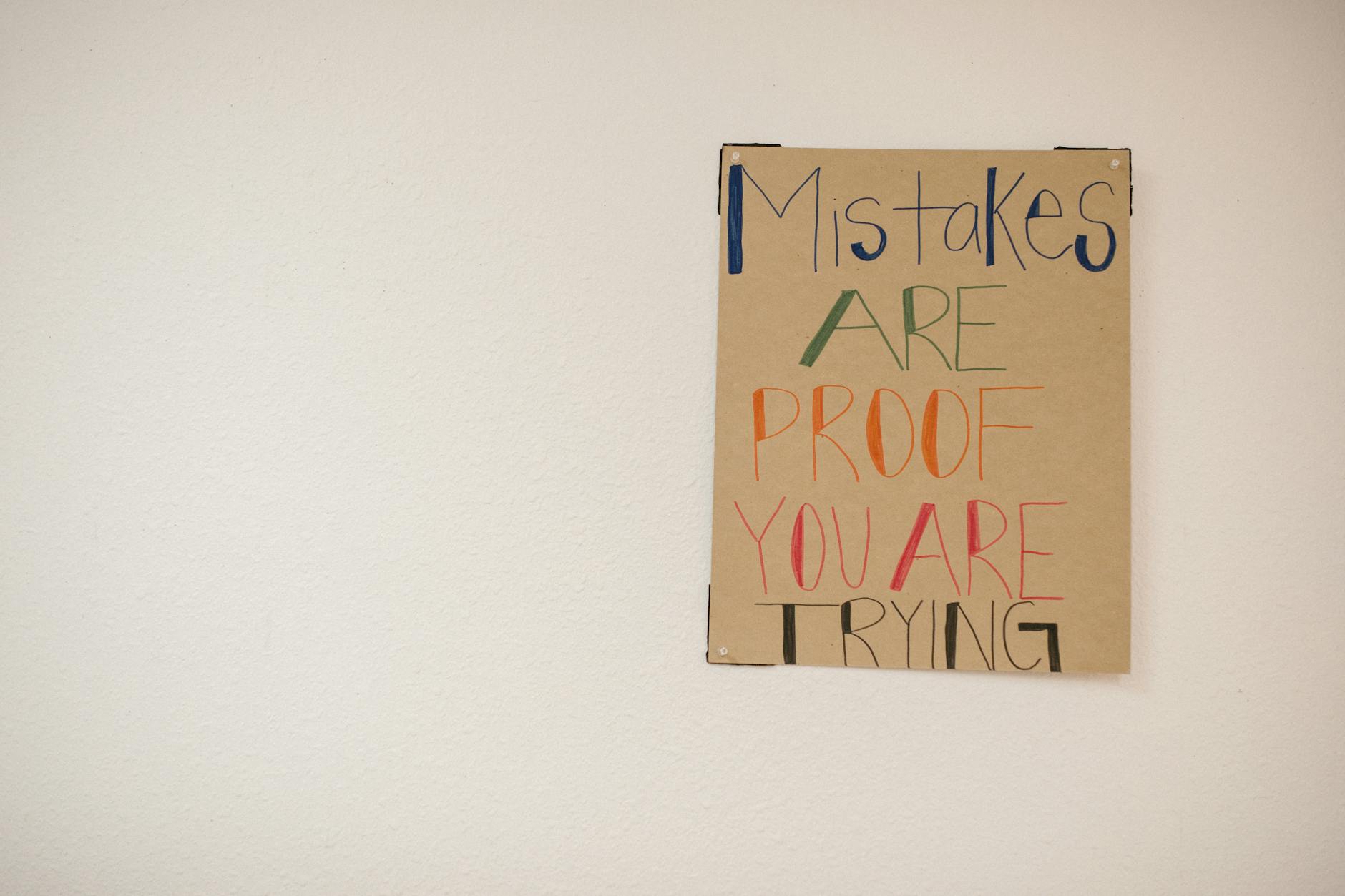 Photo by RDNE Stock project
Nothing draws people in faster than honesty about what didn’t work. Forget talking up only your finest wins because sharing your flops actually earns you real trust. People want to connect with someone who isn’t afraid to say, “Yep, I goofed up and learned from it.” When you show your less-than-perfect side, you attract folks tired of highlight reels and hungry for real talk.
Here’s what happens when you shine a light on your failures:
- You humanize yourself. No one wants to follow a cardboard cutout with no stories. Letting your slip-ups show proves you have been in the trenches.
- You spark honest conversations. Followers open up when you go first. They ask better questions and share their own lessons, creating a community of real growth.
- You build unshakable trust. People trust the person who admits mistakes more than the one who acts flawless.
If you want proof, just look at business leaders and creators who regularly post “lessons learned” or launch horror stories; no, they draw tight-knit, loyal communities. Want guidance for celebrating wins (big or small) as you go? See how taking control and recognizing the signs of healthy ambition can change your momentum in Warning Signs of Ambitious Goals.
Setbacks as Your Best Sales Pitch
Flops aren’t just confidence builders, flops are also your secret sales pitch. When you rebound from a dud, you become both relatable and gutsy. That is a rare mix and it makes you magnetic as you step into your next digital venture.
Here’s what bounced-back failures do for you:
- Show you are a risk-taker. You prove you are not afraid to try, fail, adjust, and try again. That turns curiosity into action and this is exactly what you want in an online business owner.
- Make you stand out from the “perfection pack.” Most people stick with safe, boring updates. When you share what flopped and how you are improving, you instantly look braver and more creative.
- Pull in the right followers. The people who respond to your bounce-backs are the ones who value growth, humility, and humor. These are exactly the people who you want in your digital tribe.
Stack your small wins. Every time you get back up, you show your future customers that you don’t quit and you don’t fake it. This pattern attracts people who root for progress, not perfection. If you are itching to see how these micro-wins add up for real confidence and results, focus on owning your story with the failures and with the recoveries, share it all. That is how you build trust and become unforgettable in your niche.
Conclusion
Speed, clarity, and confidence don’t come from perfection, they come from making friends with flops. A smart stumble sharpens your instincts way faster than endless planning ever will. Let each misstep remind you that you are gaining the kind of guts and wisdom that safe players will never know.
If overthinking is stopping you from picking an idea or making your next move, take a peek at How Overthinking Wrecks Your Business. Let go of the myth that you have to get it right the first time.
You are not alone if picking one idea feels like picking a favorite child. Invest in the Vision Clarity e-book for hands-on help zeroing in on your best-fit digital business. There is no gold medal for hesitation.
Your sharpest insights (and boldest wins) are waiting on the other side of your next mess-up. Thanks for reading. If you have had a recent flop worth sharing, drop your story below and let’s learn smarter and build braver together.